

Better Together Training

Better Together at Chico Hot Springs

Working with Mistrust, Distance, and the Full Range of Human Experience

Lori Marchak

Experiential Workshop for Mental Health Professionals

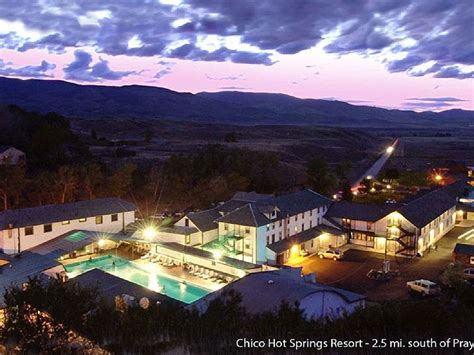
Chico Hot Springs, Pray, Montana

Tuesday morning-Friday afternoon, October 27-30, 2026

21-24 Credit Hours*

Limited to 32 Participants, 8 Assistants


Most therapy models teach us what to do.

This training focuses on something more fundamental: the conditions under which anything we do can actually work.

Drawing from—and moving beyond—Emotionally Focused Therapy (EFT) and Internal Family Systems (IFS), this experiential training introduces a different clinical orientation. One that treats mistrust, distance, and even the most difficult emotional states not as problems to overcome, but as intelligent responses to the conditions people have lived in.

Rather than focusing on technique or outcome, we will explore what becomes possible when therapists shift their role—from helping clients achieve their desired outcomes to helping create the conditions where experience can safely emerge.


What This Training Offers

This training will not present a new model to learn.

It is a way of seeing—and working—that allows you to move more freely within and beyond the models you already know.

Together, we will explore:

  • Mistrust as intelligence
    How to recognize and work with mistrust as an accurate assessment of safety—not resistance to overcome.
  • Distance as data
    How to track presence, absence, and relational distance in real time—and respond without forcing closeness.
  • Working with “cold” states
    Emptiness, collapse, fog, and disconnection—states that are often missed, pathologized, or prematurely managed.
  • Reclaiming “fire”
    Anger, disgust, contempt, and protest—not as problems, but as forms of protection, dignity, and emerging selfhood.
  • Aliveness and emergence
    What becomes possible when experience no longer has to be managed, explained, or resolved.
  • Therapist responsibility, redefined
    Moving from outcome-based responsibility (fixing, regulating, progressing) to condition-based responsibility (what can actually be supported here, now).

Who This Is For

This training is designed for therapists who:

  • Have training in experiential, relational, or parts-based models (EFT, IFS, etc.)
  • Feel both supported and constrained by those models
  • Want to deepen their capacity to work with what feels stuck, distant, or unreachable
  • Are ready to move beyond technique into a more intuitive, responsive clinical presence
  • Are in active pursuit of their own growth

What Makes This Training Different

Many trainings offer new interventions.

This one focuses on what happens before intervention matters.

We will not be building toward mastery, certainty, or a set of correct moves.

Instead, we will:

  • Slow down enough to see what is actually happening in the room
  • Work directly with what therapists often override—mistrust, distance, collapse
  • Explore where responsibility has been misplaced—and what changes when it is realigned
  • Create conditions where both therapists and clients can experience something new

This is not about doing more.

It is about seeing differently—and trusting what follows from that.

What’s Included

This is a 4-day experiential training combining:

  • Teaching and conceptual framing
  • Live clinical demonstrations
  • Small group process work
  • Dyadic and group experiential exercises
  • Handout materials
  • Breakfast and lunch each day, provided by the resort
  • Mid-day breaks to soak, nap, or explore the area
  • 21-24 CE’s (application in progress)*

Afternoons will include structured process groups, allowing participants to integrate the work personally and clinically.

Scenic view, Ghost Ranch
Learning is an Adventure. It helps to have a map.

Brittany Burch, Houston, TX

I truly cannot recommend this training any higher – 6 stars wouldn’t even be high enough. It was a game changer!
By integrating IFS into my EFT skill set, I’ve seen significant growth in my work with both individual clients & couples. Lori’s exquisite attunement modeled a style that demonstrated how to slow down, deepen and resonate with clients in a way that is a palpable shift in my work. And Jenny’s mastery of IFS brought to life how to apply this approach in a way that had previously eluded me. The experiential components interspersed with lecture gave us ample opportunities to practice new skills in a way no other training has offered. February cannot come soon enough – learning from these two master clinicians was like drinking from a well of wisdom that rehydrated and revitalized my passion as a psychotherapist. And this next training is sure to be even more nourishing. I cannot wait!

Mark Scheffers, Kalamazoo, MI

I had tried on my own to integrate IFS and EFT in my work with couples. I knew both models helped facilitate change but found myself slipping into one or the other as I worked. If I had leaned toward IFS in a session I felt like I’d missed something EFT would have contributed. If I leaned toward EFT in a session I would come away feeling like I hadn’t gone as deep as if I had used a little IFS. When I heard about the “Better Together Training” I signed up right away. I’m so glad I did. The training helped me see the different models like two layers of one process as I work. Each enriching the other. The training gave a boost to my work. I know I will continue to learn from the intersection of the two models for a long time to come.

Laura C Spiller, Ph.D.

I am a certified EFT therapist and Supervisor Candidate who loves the road map that EFT provides and embraces the guideposts provided by the EFT stages, steps, and moves of the Tango. EFT training has provided me with the ability to bring healing presence and attunement to my clients in their loneliest, darkest places. I was unsure about opening up to the IFS approach; however, Lori Marchak’s Better Together training opened up new, deeper levels in my clinical work. I experienced new ways of being exquisitely attuned to my clients inner world. It was like a new level of tango opened up, where I could move forward and *back* with the client. Previously, I tried to validate the protective moves and organize the secondary emotion to get to the vulnerability under the clients protection. In this training I learned how to dance more effectively with all parts of the client in an even more attuned, responsive manner that helps the client listen to and honor their protection. This deeper work with protectors is allowing clients to experience a more expansive and safe inner world, and provides greater access and tools for bringing care and light to those darker, isolated parts. This training potentiates the non-pathologizing stance of EFT even further, helping therapists befriend and experientially validate their client’s protection, providing an even more powerful healing container. The safe and supportive environment of the training also helped me see and care for my own parts that come alive in my clinical work.

Warren Michelson, Missoula, MT

For me, who loves big ideas and deep insights, the finest measure of a training is its applicability.
I started using the frames and confidently curious stance of this unique training Monday morning, back in my office with my lovely, suffering couples.
This training-experience (because it is both!), brings together, maybe for the first time, EFT and IFS in a highly interactive, experiential retreat format. IFS “parts language” can help couples explore the most vulnerable attachment fears and injuries with less overwhelm. EFTs attachment focus can help us find, feel and finally welcome home (love on) our exiled parts. Hope to meet you at a future EFT & IFS Together experience!

Mindy McGovern, LMFT, CST, Seattle, WA

The first iteration of this training was amazing. Lori and Jennifer provide such a wealth of experience and deep respect for EFT and IFS and how they can combine to create a richer therapist/client experience. I got so much out of their combination of didactic, experiential and hands-on learning. They create such a safe container that allows therapists more experienced with one model or the other to be vulnerable in exploring something new and leading edge. I would highly recommend this training and would be happy to answer any questions you might about participating from a participant’s perspective.

Kristin O’Hara, MS, LMFT, Woodinville, WA

Lori and Jenny did such a nice job demonstrating how to integrate IFS and EFT. From the very beginning, they created a safe and cohesive group that allowed for and encouraged personal exploration and growth. They showed us how to create safety with our clients through attunement and helped increase our awareness of and compassion for the burdens that we each carry and how this shows up in therapy. This training was so enriching for me both personally and professionally…plus it was a lot of fun!

Noah Roost, Portland, OR

Lori Marchak’s integration of EFT and IFS is invaluable. She helped me learn to befriend my clients’ most reactive and provocative parts. She provides hands-on, very applicable techniques to skillfully address the most challenging and stressful aspects of couples therapy (e.g. working with your clients’ rage, contempt, and dissociation). Since attending her workshop I have noticed more vitality and more effectiveness in my couples’ practice. I highly recommend the training to both individual and couples therapists interested in deepening their work with clients. Her training will help therapists bring more true acceptance and secure connection to ALL of their clients.

Workshop Participant

Having taken all the EFT required trainings for certification; Externship, Cores I & II, Self AS Therapist, the supervisory hours to be qualified as “Advanced” as well as EFT Lab II, about 6 months of EFT Cafe, an in person two-day training with Les Greenberg on EFS, a workshop with David Schwartz and IFS workshops in person and on line, I learned so much from Lori’s day long workshop on synthesizing and integrating IFS & EFT. In my experience, EFT trainers rarely mention other modalities and seems to advocate ONLY the EFT script so if one wants to add other modalities, it is either actively discouraged or ignored. I believe the EFT “map” and staying on track is usually very useful. This perspective is the one which has been validated with data from Susan Johnson research and it may be more effective than incorporating other modalities but I have not seen data comparing strict EFT with data using EFT and IFS. There are times when I believe it is useful to incorporate IFS with EFT or to shift to IFS. Lori clearly demonstrated doing just that and clarified how to determine which modality might be more effective depending on the position of the client and the therapist. She made the “Tango” much more explicit and helped me filter the variables which indicate where the work is needs to be deepened in the “Tango.”

Workshop Participant

I was fortunate to attend this workshop integrating EFT and IFS. I was awed by the clinical mastery Lori possessed in her demonstrations and didactic materials. I was confident I was in the presence of a clinician who was always present to the moment and people before her. She clearly was knowledgeable about both therapeutic models and able to speak to both fluently.

Workshop Participant

Lori Marchak is a brilliant woman with a gentle spirit. She exudes an aura of safety and confidence that makes it comfortable for anyone to be her client! I would not hesitate to refer anyone to see Dr. Marchak for individual, couple, or group counseling. And I’d refer any EFT-er or any IFS-er to attend her workshop.

Workshop Participant

Superb material – integrating two rather large theories into one. Both EFT and IFS have their strengths and together they are even more powerful. Dr. Marchak has blended the two and neither detracts from the other.

Lori Marchak

Lori Marchak, MS, Ph.D, LMFT, LCPC

Lori is a psychotherapist, teacher, and writer whose work explores how nervous systems adapt to impossible conditions—and what becomes possible when those conditions change.

Drawing from decades of clinical experience and training in Emotionally Focused Therapy (EFT), Internal Family Systems (IFS), and neuroscience-informed approaches, she has developed a relational framework that centers mistrust, distance, and the full range of human emotional experience as intelligent and necessary.

Her work focuses less on changing people and more on shifting the conditions that make change possible.

She lives and practices in Bozeman, Montana.

More Details

Learning Objectives

Participants will be able to:

  • Differentiate between outcome-based and condition-based therapeutic approaches
  • Recognize and work with client mistrust as adaptive intelligence
  • Track and respond to relational distance in clinical interactions
  • Work more effectively with dissociation, collapse, and “cold” emotional states
  • Distinguish between defensive and protest anger and respond appropriately
  • Apply a therapist stance that supports safety without overriding client protection
  • Integrate these principles into their existing clinical framework

Is This Couple or Individual Therapy Training?

Both.

While many demonstrations and exercises may involve couples (to make relational dynamics more visible), the principles apply equally to individual therapy. The focus is not on a specific modality, but on how experience is met in the room.

For Those Returning

This training represents a continued evolution of this work.

Participants who have attended previous Better Together trainings will find:

  • A more clearly articulated and independent model
  • Expanded focus on mistrust, distance, and cold states
  • New experiential exercises and process group structures
  • Greater emphasis on therapist orientation and responsibility
    Staying at Chico

    Chico Hot Springs
    Pray, Montana is 30 minutes north of Yellowstone National Park.

    Check-in is Monday afternoon or evening. Call Chico directly to book your room—there are a variety of options. Please mention “Better Together” when reserving as we have a block of rooms set aside for the training. 

    This training includes extended midday breaks to rest, reflect, and take in the surrounding landscape.

    How experiential is the training?

    Highly experiential.

    Each day includes demonstrations, dyadic exercises, and small group process work. Participants are invited—but not required—to engage at a personal level.

    There is no expectation to share beyond what feels appropriate. Respect for individual pacing and boundaries is central to the structure of the training.

    The group size is limited to 32 participants and 8 assistants. 

    Schedule
    All times are in local Mountain Standard Time (MST)
     
    Monday, October 26
    3 pm or later: Check-in
     

    Tuesday, October 27

    8:15 Breakfast
    9:00-noon Training
    Noon-2:30: Lunch and Break
    2:30–5:30 Training
     
    Wednesday, October 28
    8:15 Breakfast
    9:00-noon Training
    Noon-2:30: Lunch and Break
    2:30–5:30 Training
     
    Thursday, October 29
    8:15 Breakfast
    9:00-noon Training
    Noon-2:30: Lunch and Break
    2:30–5:30 Training
     
    Friday, October 30
    Room checkout by 10:00 am
    8:15 Breakfast
    9:00-noon Training
    Noon-2:30: Lunch and Break
    2:30–5:30 Training
     
    Prerequisites

    To get the most from this training, participants should (1) understand the Emotionally Focused Therapy model and have practice working with either individuals or couples in that model. Ideally, participants will have completed an EFT Externship. Likewise, participants will have (2) basic understanding and experience with the Internal Family Systems model through formal or informal learning or personal therapy. Experience using IFS in your practice is not required.

    Interest and curiosity in exploring emerging ideas in experiential therapy is more important than prior training and experience. 

    EFT and IFS

    How is this different from EFT or IFS training?

    This work is informed by both EFT and IFS, but it is not a combination or comparison of those models.

    The focus here is on areas that are often underdeveloped across models, including:

    • working directly with mistrust
    • tracking relational distance in real time
    • supporting “cold” states such as collapse and emptiness
    • redefining therapist responsibility around conditions rather than outcomes
    Getting to Chico Hot Springs

    For those traveling from outside the region, plan to fly into Bozeman or Billings, Montana, airports. Plan for an additional driving time of 1 hour from the Bozeman airport or 2 hours from Billings.

    There is no public transportation to Chico; a car ride will be necessary. As the date approaches, we will use email announcements to promote ride-sharing.

    Visiting Yellowstone National Park

    Chico Hot Springs is 30 miles from the north entrance to Yellowstone National Park. As the park is roughly the size of the state of Connecticut, it is ideal to plan a multi-day visit if you go. Lodging in the national park fills up well in advance. Nearby Gardiner, Montana, has many private lodging options.


    Policies and Procedures

    Confidentiality of Participant Information and Breaches of Confidentiality

    Trusted Journeys, Inc. will ensure that participant information, including name, contact, and payment information, will be kept confidential. In the case of a breach of confidentiality, Trusted Journeys will contact the participant.  

    Program Complaints

    If a participant or potential participant would like to express a concern about Lori Marchak or a continuing education program provided by Trusted Journeys, the individual may  email Lori Marchak at trustedjourneys@gmail.com, Laura Spiller, drspiller@lauracspillerphd.com, training coordinator, or Tahlia Rainboldt, t.rainboltphd@gmail.com, training coordinator. Although we do not guarantee a particular outcome, Trusted Journeys will consider the complaint, make any necessary decisions, and respond within 30 days.

    Fees, Refunds, and Cancellation

    The fees, refund, and cancellation policy are located on the registration form, below. 

    Attendance

    Credit will be given for live attendance only. Partial credit will be given based on hours in attendance, when the participant attends at least 6 hours of the live training. 

    Disclosure or Use of Client Information in a CE Program

    Client information must not be disclosed by a presenter or participant unless proper informed consent has been obtained for use in a continuing education program.

    $0.00
    *Students, BIPOC, and financially challenged individuals are welcome to pay a partial amount of their own determination. Please email trustedjourneys@gmail with the amount you’d like to pay to receive an adjusted invoice.
    Breakfast and lunch are provided in the training room each day. Dinner is on your own at Chico or other area locations.
    As an training participant I affirm that I have training and educational qualifications to practice legally as a professional mental health practitioner or am currently in a formal training to be a professional mental health practitioner. I also agree to abide by a mental health professional code of ethics. I will follow legal confidentiality requirements regarding all client and participant information shared in the training. I understand that this training does not count toward certification in EFT or IFS, and that Trusted Journeys, Inc. is not affiliated with ICEEFT or The IFS Institute. Enrollment in this training constitutes an agreement to hold harmless Trusted Journeys, Inc. and all presenters and trainers from any and all claims, actions, and judgements, including all costs of defense and attorney’s fees incurred in defending against claims.
    Full refund (minus $100 administrative fee) available through September 1, 2026.
After that date, tuition is non-refundable but may be transferable.