
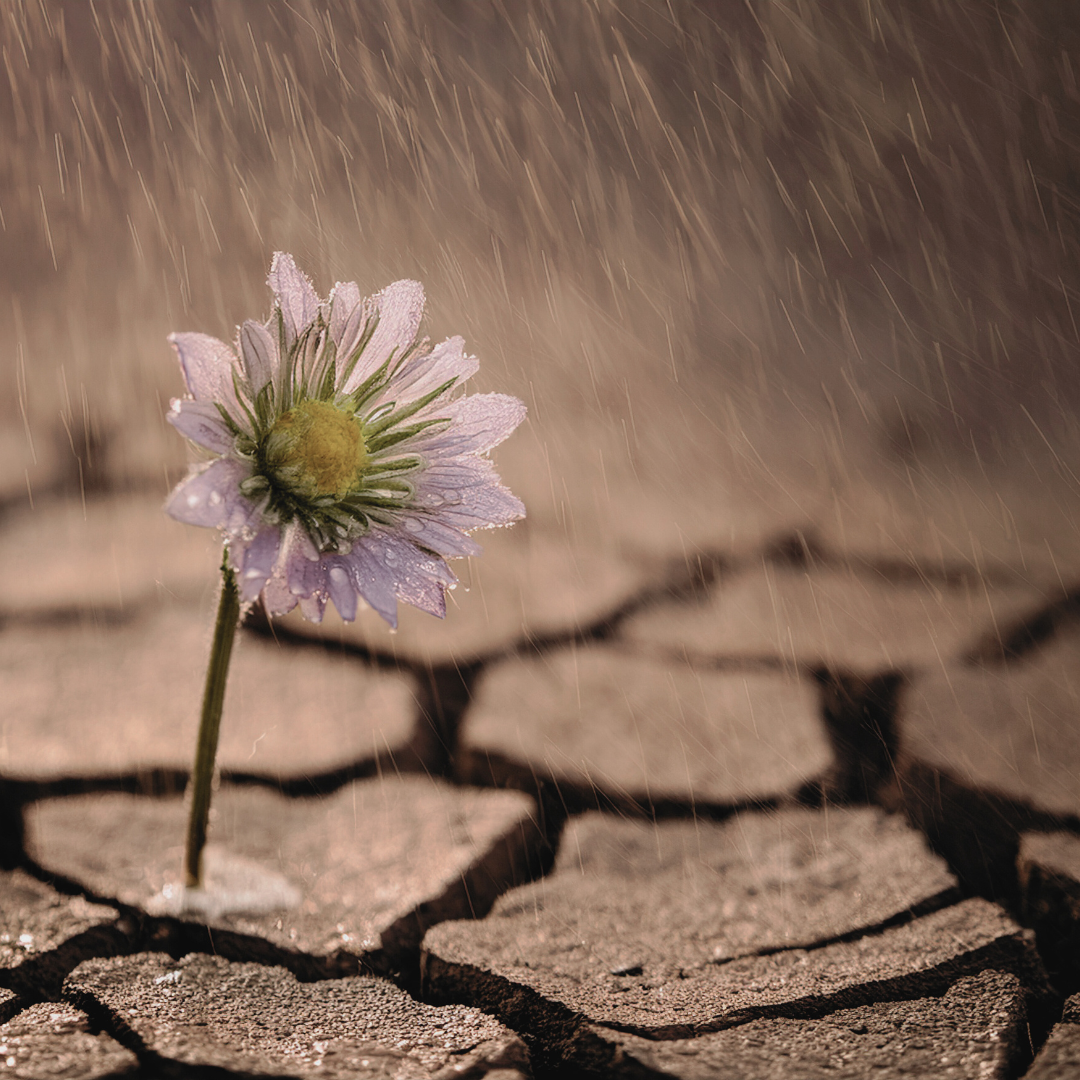

Growth Requires New Conditions, Not New Effort
People in close relationships often come to me after years—sometimes decades—of being stuck in painful cycles. Individuals come for similar reasons, hoping to find relief from internal patterns so deeply ingrained that nothing they do touches them.
They’ve read books, listened to podcasts, and tried to “communicate better.” They’ve tried to be more patient, more open, more empathic. Nothing seems to make a difference.
Sometimes therapy does loosen something. Sometimes it changes enough. But when it does, it’s rarely because people suddenly figured out how to do something new. It’s because the conditions around them changed enough to support their natural evolution.
Why transformation is rarely an act of will
People don’t evolve under pressure. We transform when the air becomes breathable and healthy.
A therapist in the room—with enough steadiness, attunement, and emotional capacity to hold the heat—changes the emotional climate. The nervous system registers, Oh… It’s safe enough now. I can unfold.
And what once felt impossible suddenly becomes available. New choices appear. Old reflexes loosen. A different conversation becomes thinkable.
While it can be a precious gift to those who receive it, therapy is not the only place where this can happen.
Ideally, therapy would not be a bottleneck
Because suffering is so widespread, and because therapy is expensive, time-limited, and not consistently effective, I’ve been focusing on other ways we might support transformation. Ways that don’t rely on professional hours or an office setting.
I’d love to see more spaces outside therapy rooms where human beings can practice what their bodies were never taught:
-
How to feel and express anger without collapsing or attacking
-
How to be with each other in places of vulnerability
-
How to hear the truth of another person whose perspective is different from ours without losing or betraying ourselves
Most of us avoid conflict until it overwhelms us and spills out sideways—reactively, defensively, and painfully. The fight emerges only after weeks or months of quiet internal bracing. We then judge ourselves (and each other) for the mess we’ve made, sure that the pain is some personal failing rather than the predictable outcome of a skill we never learned.
What if relationship skill is something we practice—on purpose?
Imagine if we approached relational awareness the same way we approach our chosen profession or creative discipline. Not as a moral virtue we should already possess, but as a practice—a skill set that develops over time when we place ourselves in the right environments.
Every profession has its training grounds: rehearsal studios, kitchens, universities, coding boot camps, dojos, internships, and weight rooms. But in relationships, we expect mastery without practice. We assume that love should somehow give us the capacity to stay open, honest, and grounded in the moments we’re most overwhelmed.
What if we created intentional spaces where we could:
-
Build discernment and awareness for more precise, shared emotional concepts.
-
Express anger and contempt productively so they don’t erupt or poison the air.
-
Slow down enough to feel the truth in our body.
-
Experiment with new ways of responding.
-
Receive feedback and support from others who are also learning?
Our reactive, stuck patterns wouldn’t change instantly. But over time, under the right conditions, the nervous system would begin carving new pathways to deeper connection.
We would find ourselves responding differently—not because we tried harder, but because a different way of being had become possible.
We don’t need to be better people or have better partners. We need better conditions.
This is something I’m keenly interested in these days: How to build environments—communities, practice groups—where the air is clean enough, supportive enough, curious enough, to allow for relational evolution.
If transformation is less about force and more about climate, then this work is not about “fixing” anyone. It’s about giving people the conditions for their most human capacities to emerge.